
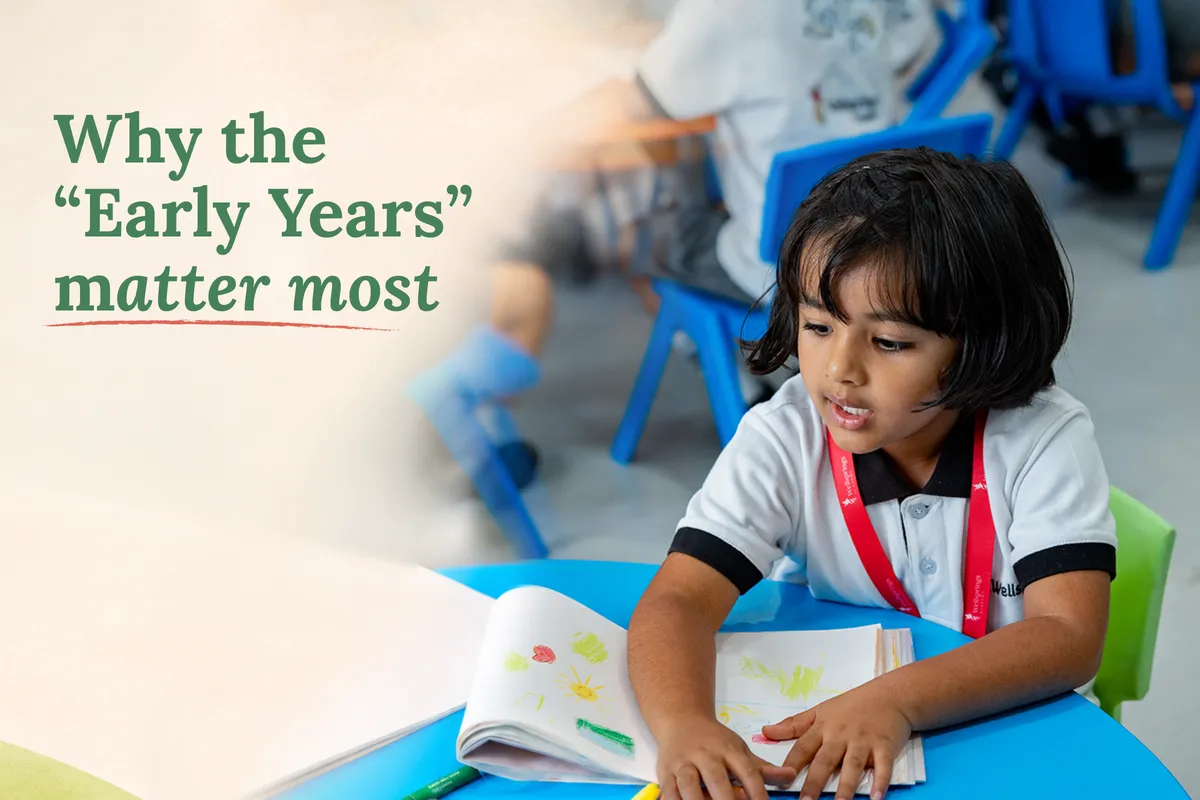
Research has long shown that a child's earliest years are the most important for their development. The National Education Policy 2020 notes that over 85% of a child's cumulative brain development takes place before the age of six. A good early years programme gives children a range of resources designed for holistic learning, ones that spark their curiosity, support their development and connect with the goals of the curriculum.
That is why every teacher in the early years needs to offer experiences that are responsive, nurturing and stimulating. Such experiences motivate children to pick up new skills and prepare them for what lies ahead. Early childhood education should follow a well-rounded curriculum focused on the whole child. Part of that curriculum must help children make a smooth move into primary school, by building their foundational skills and easing them gradually from informal learning to more structured lessons.
Because a child's physical, emotional and psychological growth matters so much at this stage, the Early Years programme at Wellsprings Academy follows the approach that NEP 2020 sets out for the foundational years. It takes a well-rounded view of development, covering physical, cognitive, language, communication, social and emotional growth. As the first step in an exciting educational journey, it helps young children build the knowledge, understanding and skills they need for the best possible start to school.
Teaching and learning in the early years are play-based and child-centred. Wellsprings has two Early Years play areas, one outdoors and one indoors, where children enjoy active play and form their first friendships, and theme-based field visits carry their learning beyond the classroom. Children who receive high-quality early care and learning tend to show better outcomes in early childhood, including stronger cognitive, social, emotional and language development.
Our Early Years programme gives young children a solid foundation for the years ahead. It prepares them for the move into primary school and helps them shift steadily from play-based learning to a more formal and structured way of learning.